
“My grandma was my hairstylist when I was little,” shared one participant.
On Sunday 15 November, a participatory writing workshop took place at ESEA Community Centre, exploring the stories, memories and meanings that can live in our hair.
Led by Lu Zhao, a multimedia and participatory artist and founder of Luminal Space Creative, the workshop was part of the ESEA Hair Archive project: a participatory oral-history and creative archive exploring hair, language, identity, migration, gender and belonging among East and Southeast Asian (ESEA) communities. Through inclusive art and storytelling, Luminal Space centres women and queer communities and explores experiences that are often underrepresented.
“Hair can be seen as personal and trivial but it carries so much and can connect us to particular people and places, family histories and childhood memories, while also reflecting the expectations placed on our bodies and identities,” said Lu.
During the three-hour session, participants were invited to reflect on their hair journeys through three interconnected exercises. The first was a short warm-up, inviting participants to recall and share hair-related words, sayings, slang and expressions from their own languages and cultures.
“Everyone’s disgusted to find hair in their food. 发菜 (black moss), literally means hair vegetable, is used in soups,” one participant wrote. They explained that, in Chinese culture, eating things that resemble certain body parts is believed to benefit those parts of the body. Eating 发菜, therefore, is associated with growing healthy hair. The name also sounds similar to 发财 (fā cái), meaning to become wealthy or prosperous, making it an auspicious ingredient.
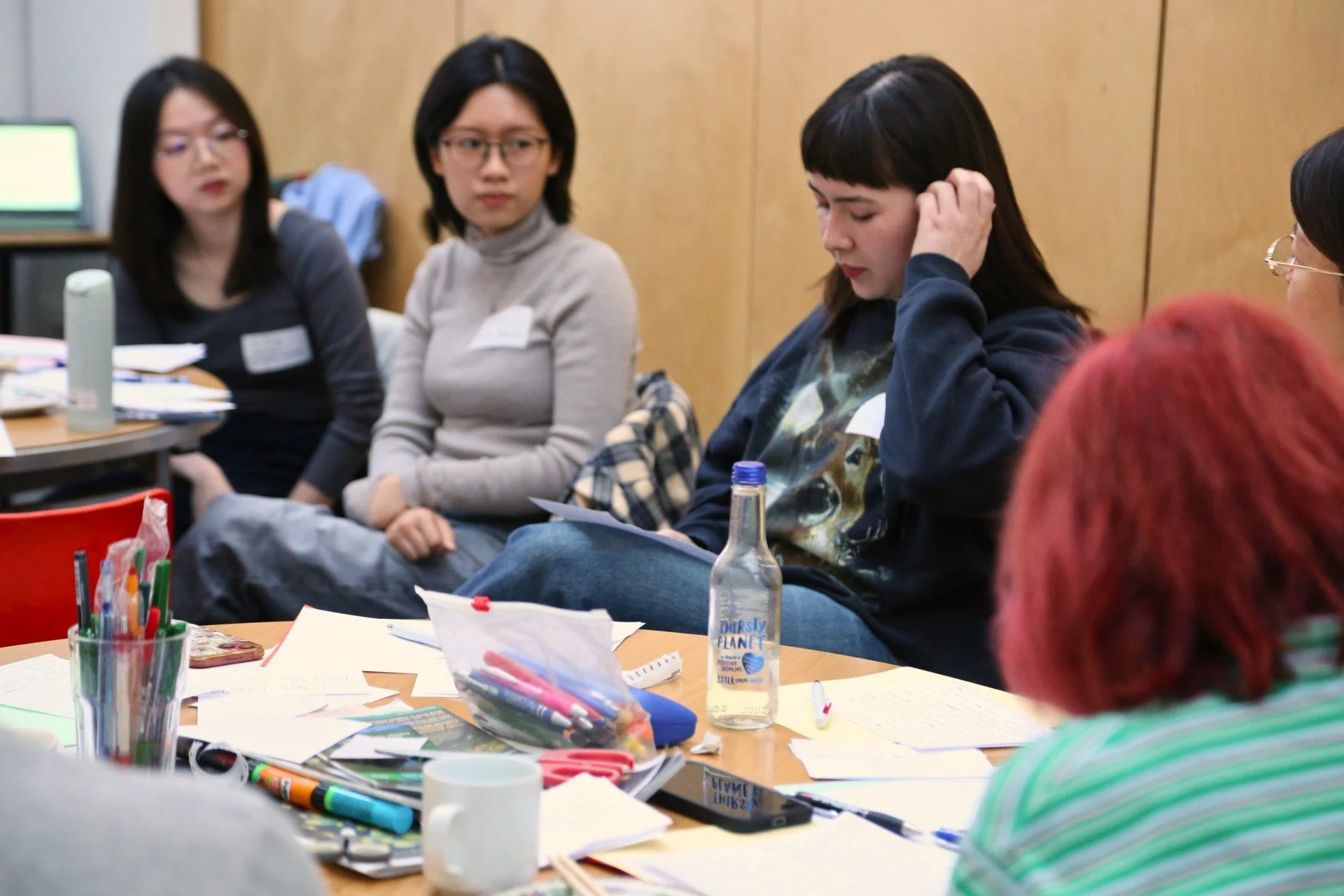
The second exercise invited participants to write a personal anecdote related to their hair, potentially drawing on the words and expressions they had explored in the first exercise. Mothers and grandmothers featured in many of these stories, highlighting how hair can hold memories of family relationships, childhood and the expectations passed between generations, and genders. Participants were encouraged to write in any format or style they felt comfortable with.
One participant shared a poem reflecting on how different institutions and social expectations have shaped the way people present themselves through their hair:
“Boarding school admissions said to them,
Your child will be free to express.
Our hair all looked the same,
not a strand out of place.
Catholic school headteacher said to them,
Your child will be close to God.
Our hair colours are harder to tame,
more and more vibrant for cyberspace.
HR officers said to us,
Bring your best self to work.
We brought every colour and shade.
They got rid of the ones they couldn't face.”
Another participant wrote about growing up in a village in Indonesia, where access to water was limited:
“I grew up in a hot country, Indonesia. In the village where I was born and went to school, there was a lack of water. We relied on rain water. At that time there was no tap water yet. My mother cut our hair and didn’t allow us to have long hair because in that climate our hair had lice. Every month my mother will check our hair and clean it of lice and the eggs of the lice. Hence our hair was kept clean and short.”
In the final hour, participants brought their reflections together in the main creative activity: making a personal collage about their hair journeys. Using photographs, memories, places, people, words and significant moments, they created visual responses to the stories they had explored throughout the session.
The collages were collected at the end of the workshop with participants’ consent and will be brought together in a collective zine, becoming part of the growing ESEA Hair Archive. This will be the next step in developing the project and preserving the participants' creative responses as a shared publication.
During the session, participants also enjoyed specially prepared homemade Sichuanese food by Grace C, including steamed rolls, braised beef slices and overnight pickles.
The workshop received overwhelmingly positive feedback. One participant reflected:
“Goodness, what a gift this workshop has been! Brought back memories about my relationship with hair which I had kept hidden for a long time, and blown away by how intimately tied to my identity and life something as basic as hair has been! Hair is indeed entangled with meaning.”
Another participant shared:
“I haven’t thought about my hair in any depth before other than when I did or didn’t like it at the moment. This has made me reflect on not only my own relationship with hair, but my parents.”
Through personal memories, cultural expressions and creative storytelling, the workshop demonstrated how something as everyday as hair can become a starting point for exploring much bigger questions: where we come from, what we inherit, how we express ourselves, and where we feel we belong.
Hosted at ESEA Community Centre, the workshop was made possible with the Centre's support and provision of a welcoming space for participants to come together, share personal experiences and explore their cultural identities through creative activities. The collaboration reflects the importance of community spaces in creating opportunities for connection, expression and shared learning.
All images courtesy of Grace C and Luminal Space Collective.
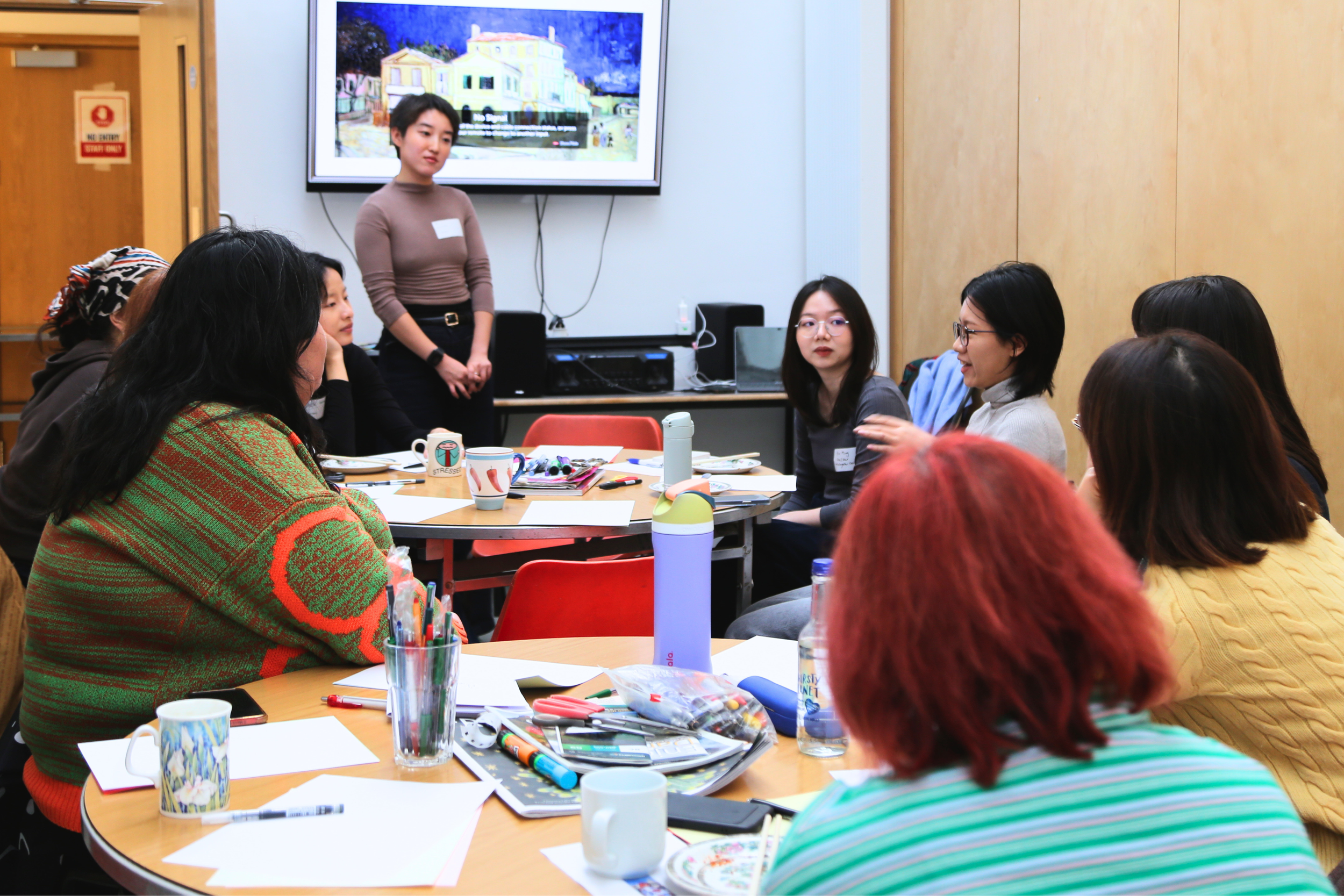
Hair Archive Writing Workshop
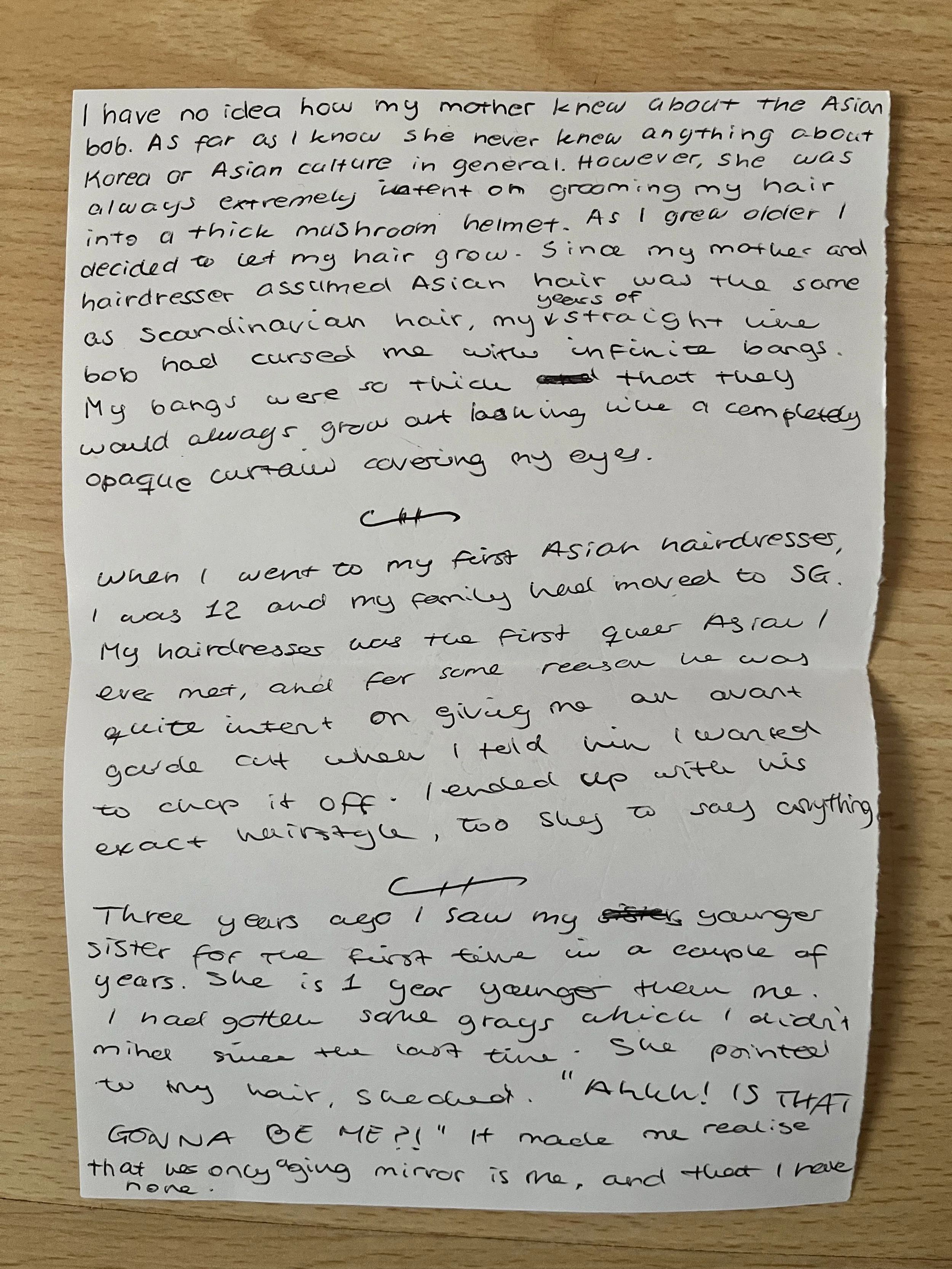
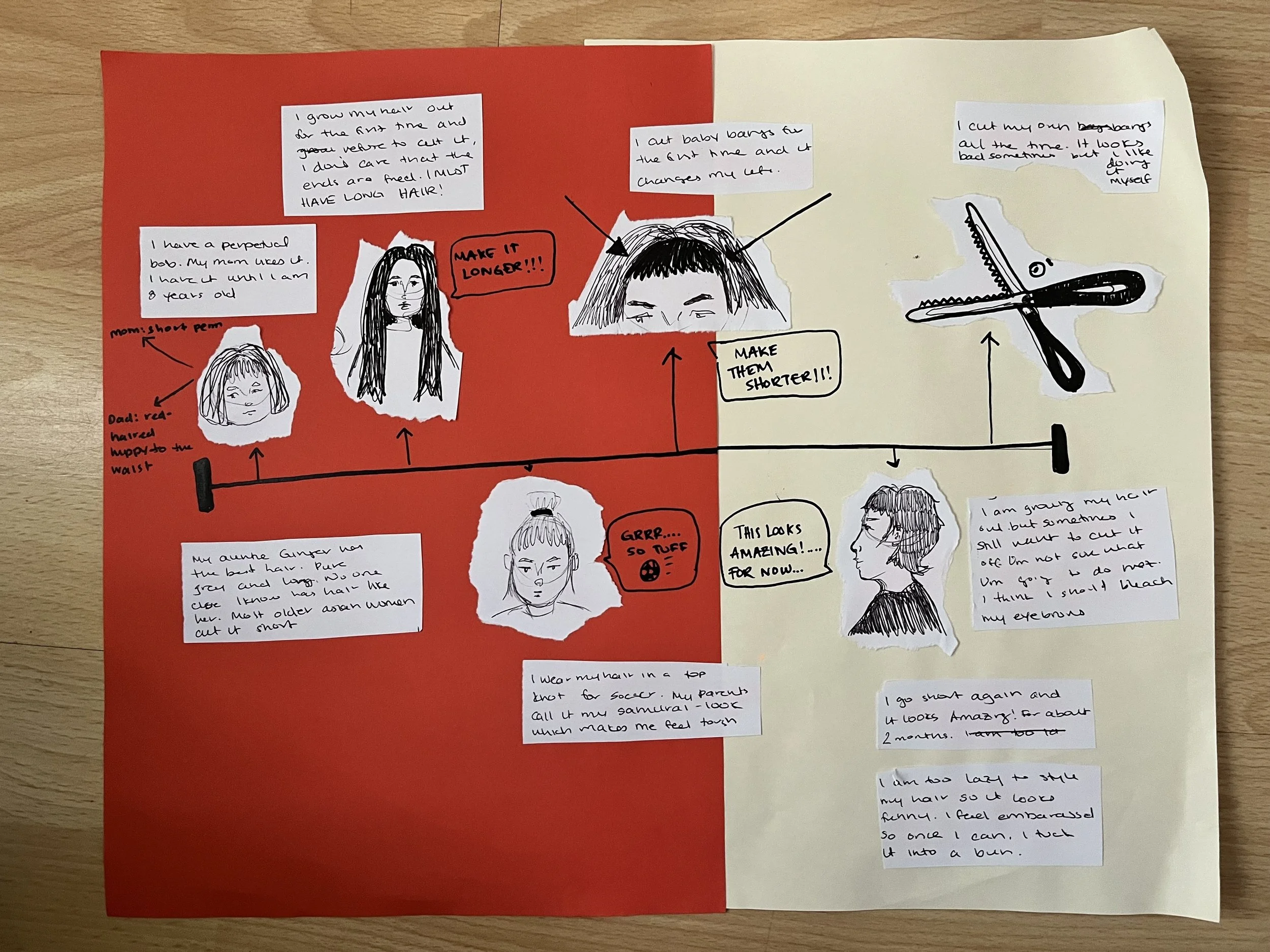
Participant Collage
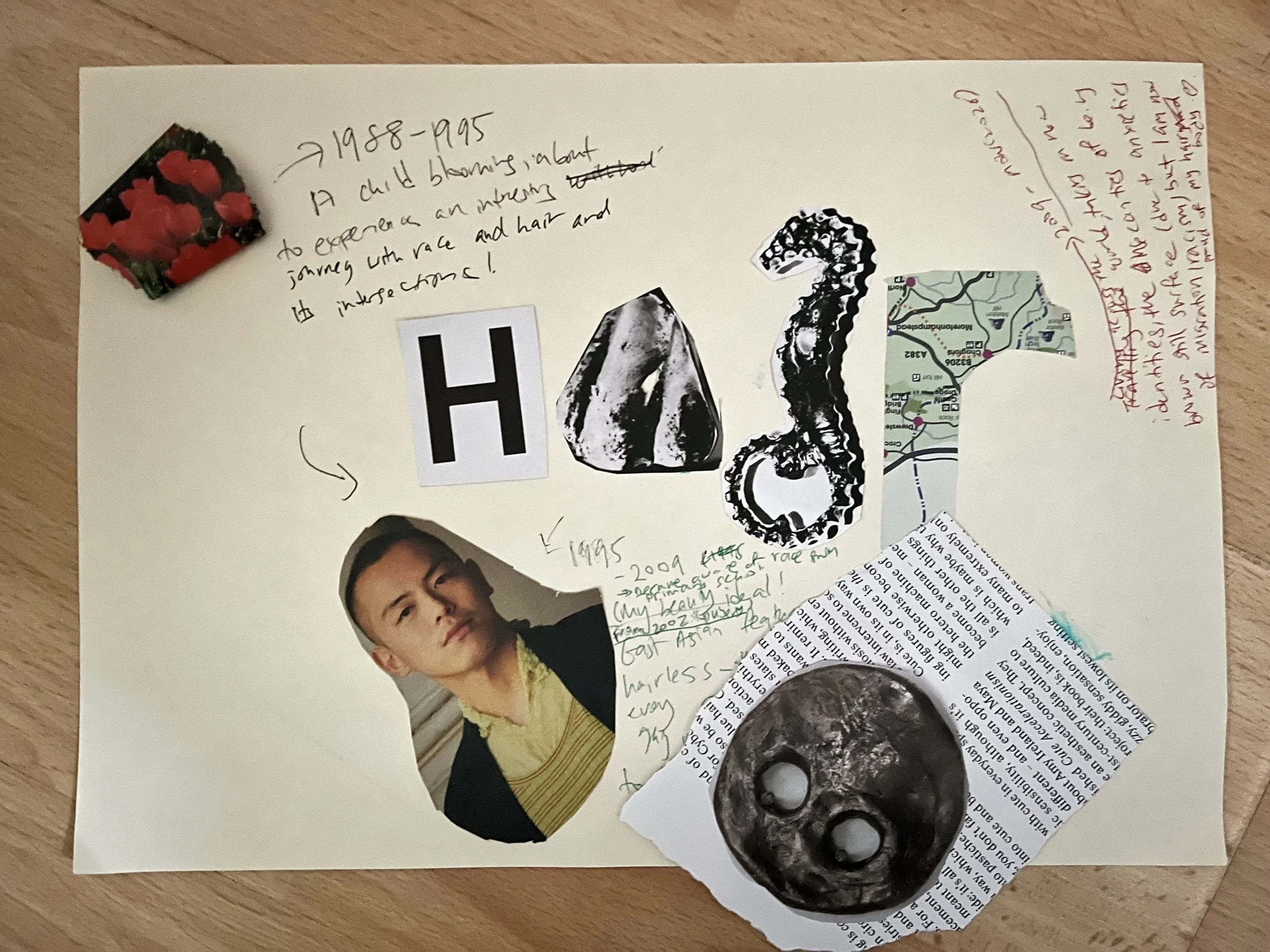
Participant Collage 2
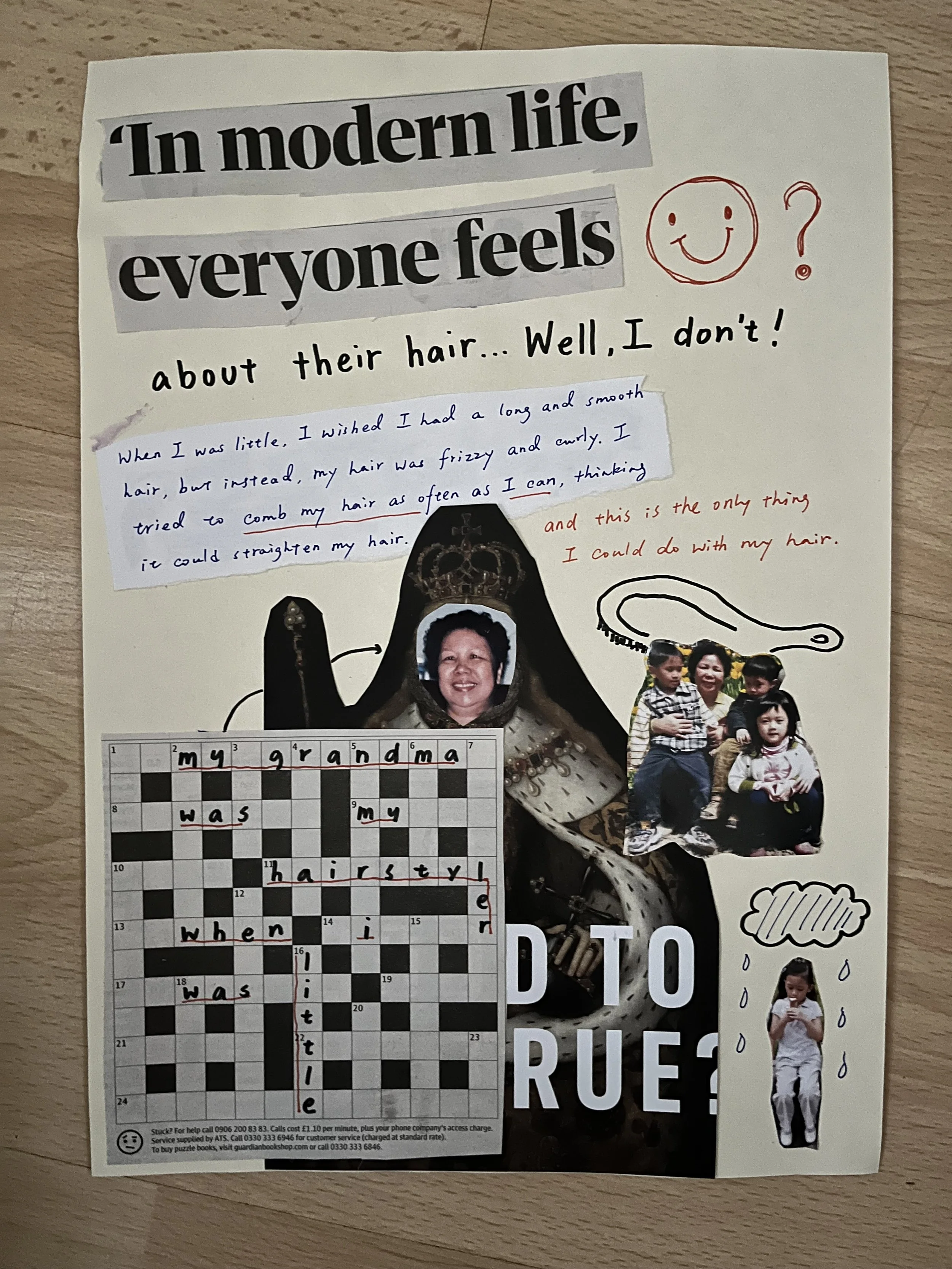
Participant Collage 3